


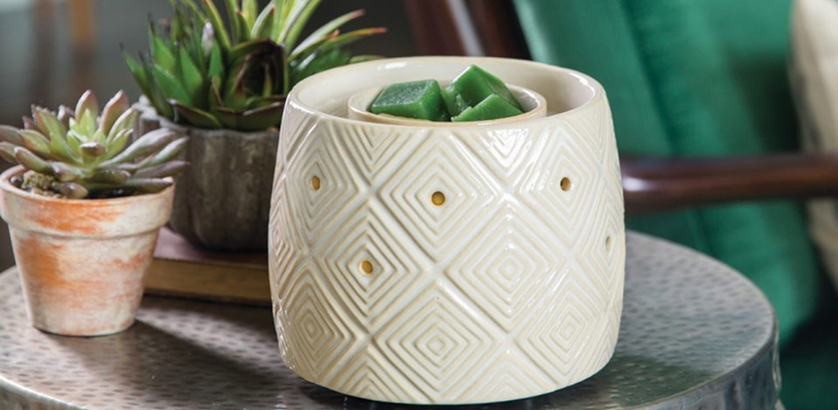
Thinking about using a regular lamp to warm a candle without a flame? It can work in limited cases, but most lamps are not designed for safe, focused heating. The wrong setup may overheat jars, weaken fragrance, or create hazards. This guide explains what candle warmers do, when a lamp might work, how to test safely, and the best alternatives and practices for reliable results. It also covers whether candle warmers can cause fragrance to smell weaker over time and how to use a candle warmer for
consistent scent.
What Is a Candle Warmer and How Does It Differ From a Regular Lamp?
A candle warmer releases fragrance by heating wax without burning the wick. Two main types exist: lamp-style (top-down radiant heat) and plate-style (bottom-up conductive heat). Both aim for a steady scent with less soot and risk than an open flame. Knowing how to use a candle warmer helps you manage heat and prevent scent fade.
- Lamp-style warmers: Place a heat bulb above the candle to melt the surface evenly. Adjustable height and brightness help match different jars and wax blends for a quick, clean melt pool.
- Plate-style warmers: Heat the jar from below for gentle, consistent melting. They’re simple to use and suit many jar sizes, though they may take longer to reach full scent.
- Regular lamps: Built for light, not controlled heat. Many use cool-running LEDs. Even incandescent or halogen lamps often lack focused reflectors, adjustable distance, and safety features. This is why most household lamps underperform as warmers. If you’re asking ‘can any lamp work as a candle warmer?’, the short answer is usually no.
Warming instead of burning reduces flame risk, soot, and wick care, and can preserve candle
appearance and extend usable life when used correctly.
Can Any Lamp Be Used as a Candle Warmer? Key Safety and Performance
Factors
No. Only certain incandescent or halogen lamps with the right geometry can work—and even then, results vary. LED lamps generally do not produce enough heat. Dedicated warmers deliver safer, more consistent performance. So, can any lamp work as a candle warmer? In practice, only a few can, and they require careful setup.
- Bulb type matters most: Incandescent/halogen bulbs emit usable radiant heat; LEDs do not. Specialty high-heat emitters require fixtures rated for them and are not advised in standard lamps.
- Safety is critical: Use a stable lamp, keep flammables clear, inspect cords and sockets, and never exceed wattage ratings.
- Wattage, distance, and heat focus: Standard lamps usually lack reflectors and controls, making heat uneven and harder to manage.
Can Candle Warmers Cause Fragrance to Smell Weaker Over Time?
Yes—if the wax is overheated, the fragrance can smell weaker over time because volatile scent
compounds evaporate too quickly. Long, high-heat sessions can also ‘cook’ the fragrance, causing a flat or scorched aroma. To avoid this, learn how to use a candle warmer properly: keep sessions moderate (1-2 hours), adjust distance or dim output, and let the jar cool between sessions.
When used correctly, warmers can maintain a steady scent without burning the wick. If fragrance seems weak, reduce heat, shorten sessions, or switch to the best candle warmer for your jar size and wax type. Some wax blends naturally throw less without a flame; a lamp-style warmer with focused top-down heat can help.
How to Test a Lamp Safely as a Candle Warmer: A Step-by-Step Process
If you try a lamp, proceed cautiously and stop at the first sign of overheating. This mirrors how to use a candle warmer safely.
- Initial compatibility check:
– Use an incandescent or halogen bulb only.
– Stay within the lamp’s wattage rating.
– Ensure you can position the bulb directly above the wax.
– Confirm the lamp is stable and components near the bulb can tolerate heat. - Prepare the area:
– Set on a flat, heat-safe surface.
– Remove the lid; avoid drafts. - Set initial distance and timing:
– Start with the bulb 4-6 inches above the wax.
– Use 25-40W within rating.
– Run 15-20 minutes; look for gentle, even softening. - Monitor temperature and jar integrity:
– Jar should be warm, not hot to the touch.
– Stop if you see smoke, bubbling, or scorching. - Adjust gradually:
– If no melt, slightly reduce distance or increase wattage within rating.
– Retest in short intervals. - Determine suitability:
– If it melts 1/8-1/4 inch within 30-60 minutes without overheating, it may serve temporarily.
Otherwise, switch to a dedicated warmer.
Choosing the Best Candle Warmer and Practical Setup Tips
Purpose-built warmers are more reliable, predictable, and safe. Lamp-style warmers (top-down) typically use 25-40W focused bulbs and adjustable height for fast, even surface melts. Plate-style warmers (bottom-up) offer gentle heat for small to medium jars and melts. The best candle warmer for larger jars is often a lamp-style unit; for smaller jars or thin glass, a plate-style may be the best candle warmer.
Choosing the Best Candle Warmer and Practical Setup Tips
Purpose-built warmers are more reliable, predictable, and safe. Lamp-style warmers (top-down) typically use 25-40W focused bulbs and adjustable height for fast, even surface melts. Plate-style warmers (bottom-up) offer gentle heat for small to medium jars and melts. The best candle warmer for larger jars is often a lamp-style unit; for smaller jars or thin glass, a plate-style may be the best candle warmer.
- Choose the right location: Flat, heat-safe surface with good airflow; avoid enclosed spaces.
- Match warming style to candle size: Plate warmers for small/medium jars; lamp-style for larger jars.
- Control session length: Start with 1-2 hours; use a timer; let the jar cool between sessions.
- Mind the jar and wax: If too hot, increase distance, dim, or shorten time.
Final Verdict: Should You Use a Regular Lamp as a Candle Warmer?
Sometimes—but it’s rarely ideal. You’ll need an incandescent or halogen bulb, precise positioning, and close monitoring, and even then results vary. If you’re wondering ‘can any lamp work as a candle warmer?’, remember that dedicated warmers are safer and more consistent.
For everyday, reliable fragrance and peace of mind, choose a purpose-built unit, learn how to use a candle warmer correctly, and start with short sessions while you dial in your setup. This helps prevent fragrance from smelling weaker over time and delivers the best experience.